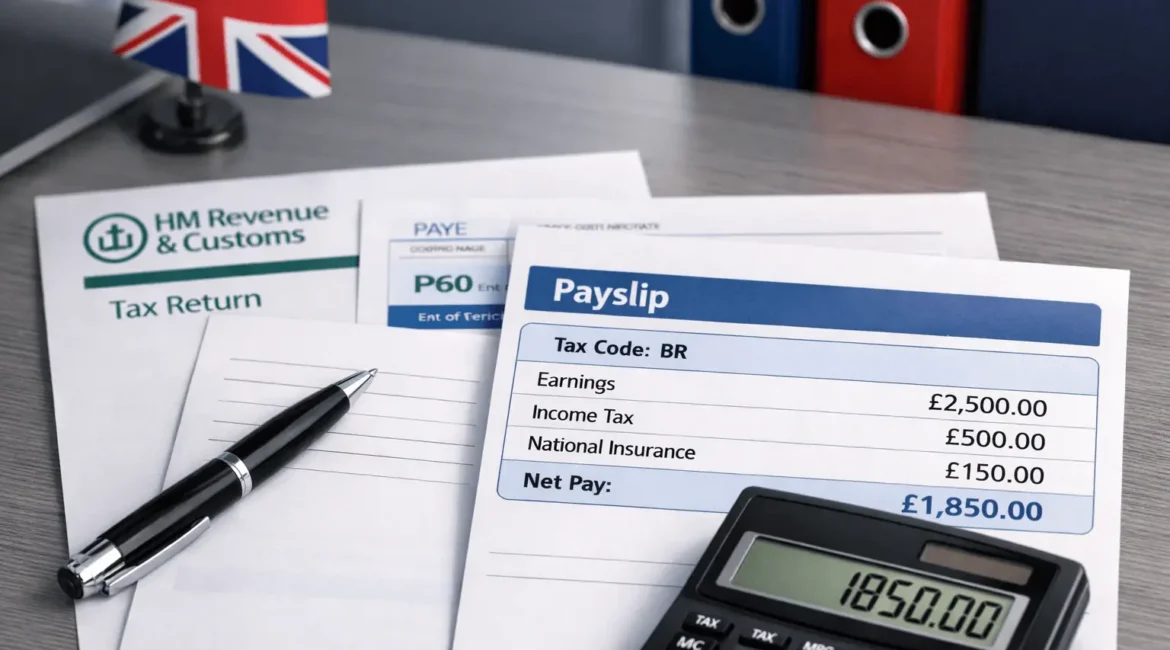
What Is Tax Code BR in the UK? Meaning, HMRC Rules & Examples
Tax code BR is one of the most commonly misunderstood PAYE tax codes in the UK. If you have seen BR on your payslip, P45, or HMRC correspondence, it usually means that all income from that source is being taxed at the basic rate of 20%, with no Personal Allowance applied to that job or pension.
For many people, tax code BR appears when they start a second job, receive a pension alongside employment income, or when HMRC does not yet have enough information to assign the correct code. In some cases, it is correct. In other cases, it can lead to overpaying tax if your allowances have not been allocated properly.
This guide explains what tax code BR means, who usually receives it, how HMRC applies it, and what you should do if you think your code is wrong.
What does tax code BR mean?
In the UK PAYE system, tax code BR means your income from that specific employment or pension is taxed entirely at the basic rate. BR stands for Basic Rate.
Unlike a standard tax code such as 1257L or other allowance-based codes, the BR tax code does not give you any tax-free Personal Allowance on that income source. Instead, every pound earned from that job or pension is taxed at 20%, up to the relevant tax thresholds.
This does not necessarily mean you are being overtaxed overall. It often means HMRC has already allocated your Personal Allowance to your main job or main pension income.
Why would HMRC give me tax code BR?
HMRC usually applies tax code BR when it believes one income source should be taxed without any Personal Allowance. Common reasons include:
- You have a second job
- You receive more than one pension
- You started a new job and payroll does not yet have the correct tax information
- HMRC has not received your full PAYE details yet
- Your main Personal Allowance has already been used elsewhere
For example, if you work full-time in one role and then take a part-time evening job, HMRC may place your second job on tax code BR because your allowance is already being used against your main salary.
Is tax code BR correct for a second job?
Yes, in many cases tax code BR is correct for a second job. The UK Personal Allowance is normally applied only once. If your main salary already uses that allowance, your second job may be taxed at the basic rate from the first pound earned.
However, tax code BR is only correct if HMRC has accurately identified which job is your main source of income and whether your total earnings fit basic-rate treatment. If payroll or HMRC has incomplete information, you could be placed on BR temporarily even when another code would be more accurate.
How much tax do you pay on tax code BR?
If you are on tax code BR, income from that job or pension is taxed at 20%. There is no tax-free allowance applied to that source.
Example:
- Monthly earnings from a second job: £1,000
- Tax code: BR
- Income tax deducted at 20%: £200
This example only covers income tax. National Insurance may also apply separately depending on your earnings and employment circumstances.
What is the difference between BR and 1257L?
The difference is simple:
- 1257L is the standard code for many employees and includes a Personal Allowance
- BR taxes all income from that source at 20% with no allowance
So if your main job uses a code like 1257L and your second job uses BR, that usually means your tax-free allowance is being used in the main job only.
Can tax code BR be wrong?
Yes. Although tax code BR is often correct, it can also be wrong. Common situations include:
- Your employer submitted incomplete starter information
- Your old job details were not updated correctly
- HMRC allocated your Personal Allowance to the wrong income source
- You no longer have a second job, but HMRC still treats it as one
- Your circumstances changed and your code was not updated
If tax code BR is wrong, you could end up paying too much tax during the year. In many cases this can later be corrected through payroll, a tax code adjustment, or a refund from HMRC.
How do I check if my BR tax code is correct?
You can check whether your HMRC BR tax code is correct by reviewing:
- Your latest payslip
- Your Personal Tax Account with HMRC
- Your P45 or starter information
- Your list of active jobs and pensions recorded by HMRC
The most practical step is to compare which job should be your main one and whether your Personal Allowance is currently being applied there. If HMRC has assigned BR to the wrong income source, the code may need updating.
According to official HMRC tax code guidance , tax code BR means income is taxed at the basic rate without a Personal Allowance attached to that source.
How do I change tax code BR?
If you think your tax code BR is wrong, you should contact HMRC or update your information through your Personal Tax Account. You may need to provide:
- Your employer name
- Your estimated annual income
- Details of any second jobs or pensions
- The job that should receive your Personal Allowance
In some cases, the problem is temporary and payroll will correct itself once HMRC processes the relevant employment details. In other cases, you may need HMRC to issue a revised tax code directly.
Will I get a refund if tax code BR was wrong?
If you have overpaid tax because BR tax code was applied incorrectly, you may be entitled to a refund. This can happen:
- During the tax year through updated payroll calculations
- After the tax year through an HMRC reconciliation
- Through Self Assessment if you complete a tax return
Refund timing depends on how quickly the code is corrected and how your PAYE records are updated.
Tax code BR and pensions
Tax code BR is not limited to jobs. It can also apply to pensions, especially where you receive more than one income source in retirement. If one pension or employment already uses your Personal Allowance, another pension may be taxed at BR.
This is why it is important to review all income sources together rather than looking at one code in isolation.
When is BR better than an emergency tax code?
Some people see BR after being on an emergency code such as 0T or another temporary PAYE treatment. In those situations, BR may actually be a step toward a more accurate tax position, especially where HMRC has identified a second income source but is still finalising allocation of allowances.
Even so, you should still check whether the code reflects your real income situation.
Related UK tax guides
If you are reviewing your tax position, you may also want to read our related guides on HMRC tax free allowance explained , P800 tax refund explained , and marriage allowance in the UK .
Key takeaway on tax code BR
Tax code BR means income from that job or pension is taxed at the basic rate of 20% with no Personal Allowance applied. In many cases, this is normal for a second job or additional pension. But if HMRC has assigned the wrong code, you could pay too much tax.
The safest approach is to check which job or pension should receive your allowance, review your HMRC records, and request a correction if needed. For many UK workers, understanding what tax code BR means can help avoid confusion and unnecessary overpayments.
Frequently Asked Questions
Is BR tax code bad?
No. BR tax code is not automatically bad. It is often correct for a second job or extra pension. The issue is whether it has been applied to the right income source.
Does BR tax code mean no tax-free allowance?
Yes, on that specific income source. Your Personal Allowance may still be used in another job or pension.
What does BR mean on a payslip?
It means your pay from that employment is being taxed at the basic rate, usually 20%, with no allowance applied to that job.
Can I stay on tax code BR permanently?
Yes, if it accurately reflects your income structure, such as a permanent second job. But it should still be reviewed if your circumstances change.
How do I know if HMRC has the wrong tax code?
If your allowance is attached to the wrong job, your take-home pay looks unusually low, or your income details are outdated, your code may need correction.
Disclaimer: This article is for informational purposes only and does not constitute tax, legal, or financial advice. Tax treatment depends on your circumstances. For personalised guidance, consult HMRC or a qualified adviser.
