How to reduce your energy bills with simple lighting changes
Many UK households are looking for practical ways to manage their energy costs, and one of the most straightforward areas to address is lighting. While it might seem like a small part of your overall bill, inefficient lighting habits and outdated technology can add a surprising amount to your annual energy expenditure. This guide explains how you can make simple, effective changes to reduce your lighting costs, based on practical advice relevant to British consumers.
Understanding your lighting costs
Before making changes, it helps to understand what contributes to your lighting bill. The cost is determined by the wattage of your bulbs, how many hours they are used, and the price you pay per unit of electricity (kilowatt-hour or kWh). In the UK, with the Energy Price Cap set by Ofgem, the typical unit rate provides a baseline for calculating costs. An old 60W incandescent bulb left on for 5 hours a day will cost significantly more to run than a modern 8W LED bulb used for the same time.
A common mistake is underestimating the cumulative cost of multiple bulbs, especially halogen downlights or older fittings in kitchens and living rooms. Replacing these can yield some of the quickest savings. It’s also important to consider that reducing energy use isn’t just about direct cost savings; it lowers overall demand, which can have broader benefits for the energy system.
Switch to LED bulbs
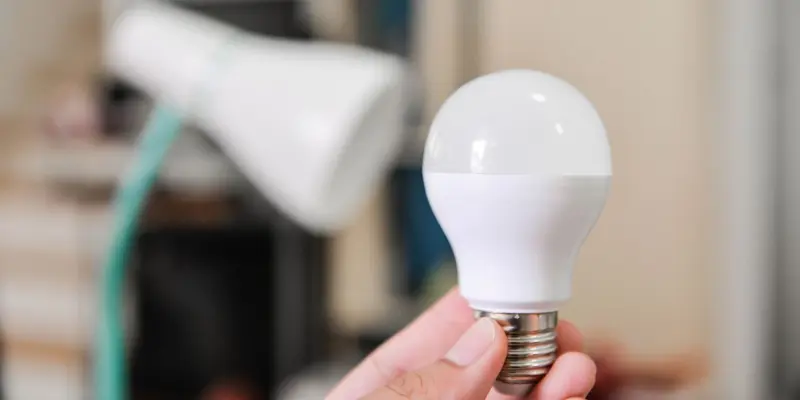
The single most effective step you can take is to replace any remaining halogen or incandescent bulbs with Light Emitting Diodes (LEDs). LED bulbs use up to 90% less energy than traditional bulbs to produce the same amount of light. They also last much longer, often for 15-20 years, meaning you save on replacement costs too.
When shopping, look for the lumens rating, which indicates brightness, rather than just watts, which indicate energy use. A good quality LED bulb with a high colour rendering index (CRI) will provide a warm, clear light comparable to older styles. You can find LED alternatives for almost every fitting, including bayonet, screw, GU10 spotlights, and candle bulbs.
Adopt smarter switching habits
Technology and habit work together to cut costs. Simply making a conscious effort to turn off lights when you leave a room remains a highly effective, no-cost strategy. To make this easier, consider where you use lighting most.
For areas like hallways, landings, or porches, installing motion sensor or timer switches can ensure lights are only on when needed, eliminating waste from forgetfulness. In living rooms and bedrooms, using table or floor lamps for focused tasks like reading, rather than illuminating the entire ceiling, can also reduce energy use. It’s a simple trade-off: being more mindful of when and why a light is on directly translates to lower consumption.
Use lighting controls effectively
Modern lighting controls offer precise management. Dimmer switches, when used with compatible dimmable LED bulbs, allow you to reduce brightness (and energy use) to suit the mood or task. Smart lighting systems, while involving an initial investment, provide advanced control via your smartphone or voice assistant. You can schedule lights to turn on and off automatically, or control them remotely if you forget to switch them off when leaving home.
For the average UK household, a combination of these strategies is most effective. Start by replacing your most frequently used bulbs with LEDs, then focus on cultivating better switching habits, and finally consider if smart controls would be beneficial for your lifestyle. The savings might seem modest per bulb, but across a full year and an entire home, the reduction in your energy bill can be substantial.
Making changes to your home lighting is a practical, immediate way for UK consumers to gain more control over a portion of their energy spending. The key is to focus on long-term efficiency through technology like LEDs, supported by daily mindful habits. The financial benefit accumulates over time, reducing both your bills and your household’s energy consumption.
Other Articles That May Interest You
- State Pension Tax Threshold: HMRC Rule Explained for 2026
- HMRC Tax Code Letters: Why State Pensioners Are Getting Them
Source:
https://www.liverpoolecho.co.uk/news/cost-of-living/ofgems-three-tips-reducing-your-33622909
