ECB’s pre-emptive stance signals a new era of central bank vigilance
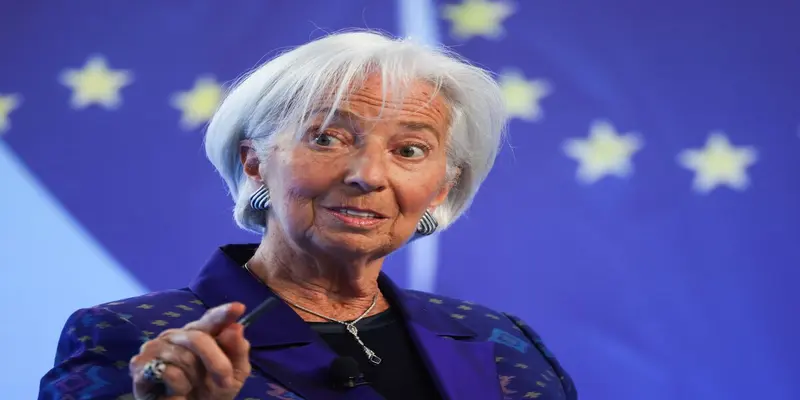
Recent comments from European Central Bank President Christine Lagarde, reported by Bloomberg, have drawn significant attention from UK market participants. Lagarde stated that the ECB will not allow a conflict in Iran to inflict the same inflation shock on the eurozone as Russia’s invasion of Ukraine did. This is not a breaking news report on the conflict itself, but a critical signal of a shift in central bank doctrine. For UK investors and policymakers, this pre-emptive, hawkish rhetoric from a major counterpart to the Bank of England suggests a new phase of monetary policy is taking shape, one defined by a determination to avoid past mistakes at all costs. The development is being closely watched now as it may foreshadow a more aggressive and coordinated global stance against secondary inflationary effects, directly affecting UK gilt yields, sterling exchange rates, and the Bank of England’s own policy calculus.
From reactive to pre-emptive: A doctrinal shift in Frankfurt
The core of Lagarde’s statement is a commitment to proactivity. The ECB’s response to the energy price surge following the Ukraine war was widely seen as initially too slow, allowing inflation to become entrenched and requiring a painful series of rapid rate hikes. By explicitly vowing to prevent a repeat, the ECB is signalling it will now interpret geopolitical supply shocks primarily through an inflation-first lens, potentially acting on the risk of higher prices before they fully materialise in the data. This marks a move away from a purely data-dependent framework towards one incorporating forward-looking risk management. For the UK market, this is highly relevant. The Bank of England’s Monetary Policy Committee (MPC) often operates in a correlated, if not coordinated, global environment with the ECB and the US Federal Reserve. A newly assertive ECB increases the pressure on other central banks, including the BoE, to maintain a similarly vigilant posture to protect currency stability and control imported inflation.
Implications for UK monetary policy and gilt markets
This shift has direct ramifications for UK assets. Firstly, it reinforces a ‘higher-for-longer’ interest rate narrative globally. If the world’s major central banks are committed to stamping out any inflationary flare-up, the timeline for rate cuts becomes extended and more uncertain. This environment typically supports the currency of the central bank perceived as most hawkish, which could see the euro strengthen against sterling (EUR/GBP), affecting UK import costs and corporate earnings. Secondly, it impacts UK government bond (gilt) markets. Gilt yields often move in tandem with German Bund yields. A more aggressive ECB stance that pushes eurozone yields higher would likely pull UK gilt yields up alongside them, increasing borrowing costs for the UK government and influencing mortgage rates. The Debt Management Office’s gilt issuance strategy must account for this potential sustained pressure on long-term borrowing costs.
Navigating uncertainty: Risks and signals for UK investors
While the intent is clear, the execution is fraught with uncertainty, which UK portfolios must navigate. The primary risk is of policy error—acting too aggressively in response to a potential shock that may not materially impact energy supplies or core inflation. This could unnecessarily stifle economic growth. Furthermore, the statement itself could become a self-fulfilling prophecy, anchoring inflation expectations higher as businesses and consumers anticipate persistent central bank toughness. For UK investors, the key signals to monitor will be the voting patterns and rhetoric of the Bank of England’s MPC in the coming months. Will they echo this pre-emptive vigilance? Additionally, market-derived measures of inflation expectations, such as the 5-year, 5-year forward inflation swap rate, will be crucial in gauging whether Lagarde’s message is effectively managing psychology. The performance of sectors like utilities, commodities, and consumer staples may also indicate where the market perceives enduring inflationary pressure.
In conclusion, Christine Lagarde’s declaration represents more than a comment on a specific geopolitical event; it is a marker of a profound change in central bank strategy with tangible consequences for the UK. It signals a collective institutional memory of recent inflationary trauma and a resolve to avoid a repeat, even at the risk of overtightening. For the UK, this means the path to lower interest rates is now more complex, external financial conditions are likely to remain tight, and the Bank of England’s independence will be tested as it balances domestic growth concerns against a global hawkish tide. The ultimate implication is that market volatility stemming from geopolitical events may be amplified, not dampened, by the new reflexive stance of the world’s most powerful financial institutions.
Other Articles That May Interest You
- HMRC Tax Code Letters: Why State Pensioners Are Getting Them
- HMRC Letters State Pensioners: Tax Rules Explained for UK Pensioners